
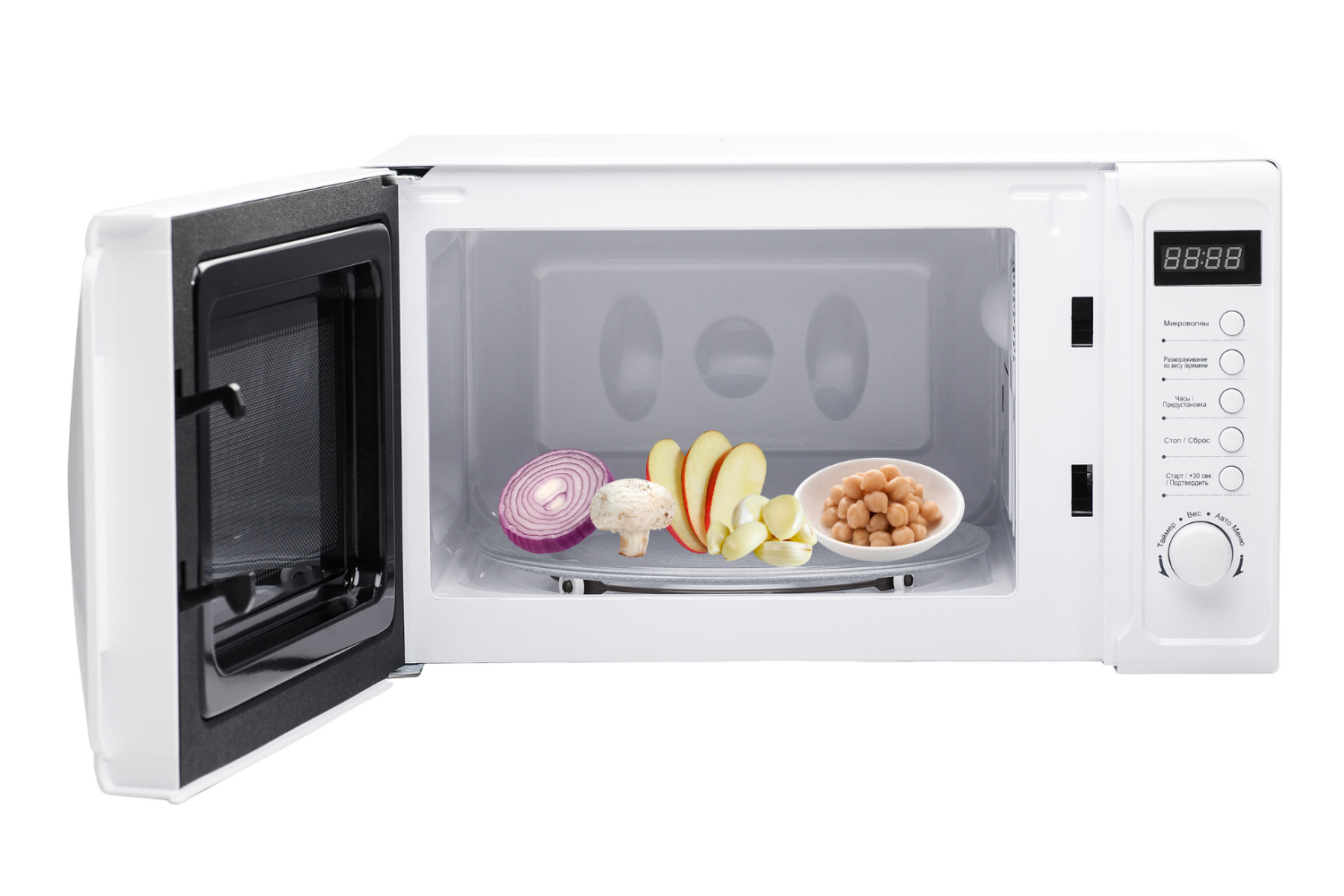
The low FODMAP diet is an effective dietary approach to manage IBS symptoms, but it comes with a major catch: many common fruits and vegetables are high in FODMAPs, making it difficult to maintain a high-fibre, diverse diet. We know sprouting, canning, and fermentation can reduce FODMAP content in foods, but what about microwaving?'
A Monash University student, Fin Heath, recently worked on a project with our lab team to explore whether microwaving high FODMAP foods in water could reduce their FODMAP content, making them more tolerable for sensitive stomachs.
The research focused on five common foods: onions, garlic, mushrooms, apples, and chickpeas. Each of these is notoriously high in various FODMAPs, such as fructans, mannitol, sorbitol and fructose.
The 100g samples were prepared by removing the inedible portions of the food, and then they were finely diced. Samples were then heated in a 1000 W microwave in 60 mL of water for various durations. Finally, they were rinsed to remove any remaining cooking liquid. Both the prepared food and the liquid were then collected and tested for their FODMAP content.
The findings were significant across the board, though some foods saw a more dramatic change than others:
The researchers found that three minutes or microwaving was the "sweet spot" for maximum reduction. The secret lies in a process called leaching - the FODMAPs, which are water-soluble, migrate from the food into the surrounding water during the heating process. Samples were also microwaved without water, and it was found that there was a much smaller reduction in FODMAPs, further showing the effects of leaching.
Interestingly, microwaving for longer than three minutes did not reduce FODMAPs further. In most cases, the FODMAP content actually began to increase! This is thought to be due to the evaporation of the water and the migration of the FODMAPs back into the food.
Overall, whilst the reduction of FODMAPs was significant, only the chickpeas became low FODMAP (green traffic light). The rest of the foods still contained an amount of FODMAPs that would classify them as moderate (amber) or high (red).
If you’re looking to try this at home, keep these points in mind:
While these results are promising, the study notes that more research is needed to understand how this process affects the taste and texture (sensory analysis) of the food. However, for those struggling to fit more variety into a low FODMAP lifestyle, the microwave may just be the newest tool in your gut-health toolkit!
 FODMAP Assistant
