
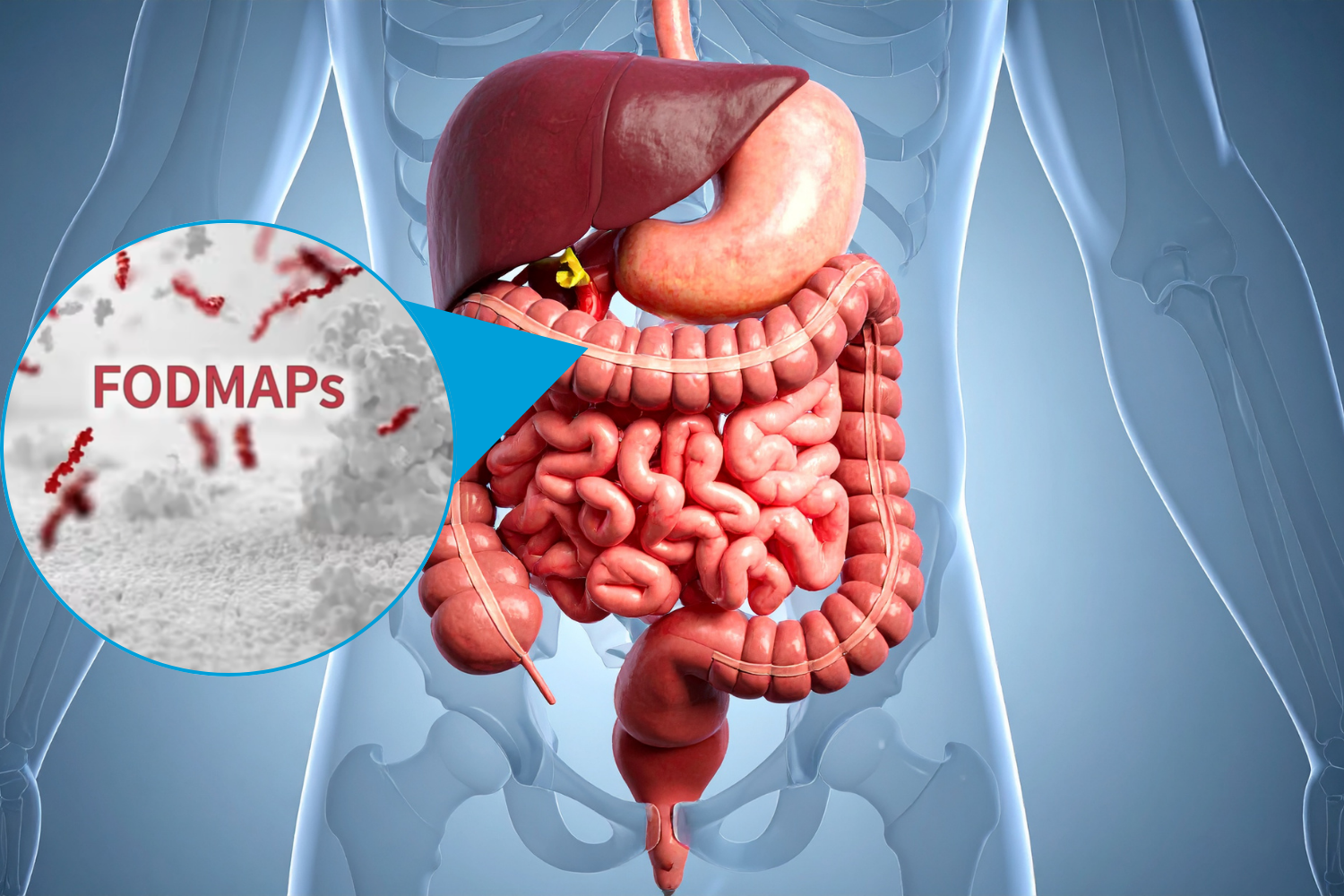
If you have IBS, you know the drill: you eat a meal that seems perfectly fine, and hours later, you’re dealing with "bloat-o-mania," pain, or a sudden dash for the bathroom.
But have you ever wondered what is physically happening inside your intestines when you eat high FODMAP foods? It’s not magic, and it’s not just "in your head." It’s a very specific biological process involving water, gas, and a highly sensitive enteric (or gut) nervous system.
FODMAPs are a collection of short-chain carbohydrates (sugars) that are famously difficult for the human body to digest.
Because these sugars aren't absorbed or fully digested in the small intestine, they continue their journey down into the bowel (large intestine), where the trouble begins.
FODMAPs are "osmotically active" molecules. In plain English, this means they act like a sponge. As they move through your small intestine, they pull water from your body into the gut.
This extra water can cause the bowel to distend (stretch) and can lead to diarrhoea as the contents of your gut become more liquid and move faster.
Once those undigested FODMAPs reach the large intestine, they meet your gut microbiome – the billions of bacteria that live there. These bacteria see the undigested FODMAPs as a feast.
The bacteria rapidly ferment the sugars. Just like yeast makes bread dough rise by producing bubbles, these gut bacteria produce gases (like hydrogen, methane, and carbon dioxide) as a byproduct of their meal. This happens quickly and causes the colon to inflate like a balloon.
Here is the most important part: Osmosis and fermentation happen in everyone. Even people without IBS produce gas and pull water into their gut when they eat FODMAPs.
The difference is that people with IBS have visceral hypersensitivity. Your gut nerves are "on high alert."
This results in the cramping, sharp pain, and intense bloating that make IBS so debilitating.
For a great visual representation of these processes, check out our video:
People often blame the food they just ate for their symptoms. However, because the fermentation process happens primarily in the large intestine, it usually takes 4 to 8 hours (or sometimes longer) for a FODMAP to reach the area where it triggers gas and pain.
If you experience bowel symptoms within 15 minutes of eating, it’s likely not the FODMAPs in that meal, but rather the gastrocolic reflex - the act of eating stimulates your gut to move, pushing previous meals (and their FODMAPs) into the large intestine.
The Low FODMAP Diet works by simply reducing the "load" of these sugars. By eating fewer FODMAPs, you:
 FODMAP Assistant


