
With increasing interest in Small Intestinal Bacterial Overgrowth (SIBO), we reached out to Professor Peter Gibson to learn more about this condition.
Small intestinal bacterial overgrowth (SIBO) refers to the increased density (i.e., relative number) of bacteria and other microbial organisms in the small bowel. The exact prevalence depends upon how it is identified and the population examined. It is observed in many (maybe 1 in 5) healthy people and can be found in 2 in 5 people with gastrointestinal conditions, such as IBS, functional dyspepsia, coeliac disease, inflammatory bowel disease and chronic liver disease.
SIBO is best considered part of the make-up or physiology of an individual – some people have more bacteria in the small bowel than others. Whether and why SIBO contributes to production of symptoms in some people and not others is still being worked out. It is currently believed that SIBO does contribute to the symptoms of some people, but this can only be determined by treating it and observing the response. Hence, SIBO is viewed as an ‘opportunity for treatment’, where therapy may or may not improve the underlying condition.
SIBO is not a condition or ‘diagnosis’ by itself. It is part of the make-up or physiology of an individual. It can be likened to being told you have blue eyes - this is part of your make up or physiology, not a diagnosis! If a person has IBS and SIBO is also present, its treatment may or may not help improve the symptoms of IBS.
How to diagnose SIBO has been the ‘stumbling block’ of progress in understanding why it is present or how it might contribute to illness. Taking fluid from the first part of the small bowel at endoscopy and culturing that fluid in the lab to determine how many bacteria are present per mL (i.e., the density of bacteria) is the ‘gold standard’ for detecting SIBO. However, this test is performed at only a few centres, mainly because it has many problems including that it is invasive, expensive, and limited by the techniques used themselves. Hydrogen breath tests were developed to enable a simple and friendly way of detecting SIBO. To do this, a sugar (usually glucose) is ingested and the rapid rise of hydrogen in the breath within 90 minutes may mean that there were excessive bacteria in the small bowel since hydrogen is only produced in the body by bacteria fermenting sugars and other carbohydrates. While this test may be useful in a research setting, it is not a particularly good test in routine clinical practice. There is a moderate chance of tests being falsely positive (i.e., you may not have SIBO, but the test says SIBO is present) or falsely negative (you may have SIBO but the test says SIBO is not present). Because of the inaccuracy of the tests, many gastroenterologists do not perform such tests in patients with IBS. Rather, many will try a therapy for SIBO to see if it helps when they feel SIBO might be present or when there is an unsatisfactory response to standard therapy of IBS.
While this situation might seem rather unsatisfactory and imprecise for the sufferer and doctor alike, much research is occurring to ‘sharpen up’ the tests or develop new tests in order to be more precise.
Standard treatment of SIBO is to use antibiotics to reduce the number (density) of bacteria in the small bowel. A short course is all that is needed. Different antibiotics have been used, the most common being rifaximin. If symptoms improve, there may be a prolonged benefit in some people. If the symptoms recur (which is common), then another course of antibiotics can be used. It is important to note that the treatments for SIBO are also used to treat IBS, to reducing bacteria in the large bowel.
There are frustrating problems here too. First, the antibiotics also affect the bacteria in the colon, so whether a response in symptoms is due to effects on the SIBO or in the colon is uncertain. Second, as IBS is a long-term condition, people might need repeated courses of antibiotics, which may not a good thing for the person or for the environment (because of the possible development of bacteria resistant to antibiotics). This is the reason why many doctors are reluctant to use antibiotics in most people with IBS unless they are not winning in controlling the symptoms with other means.
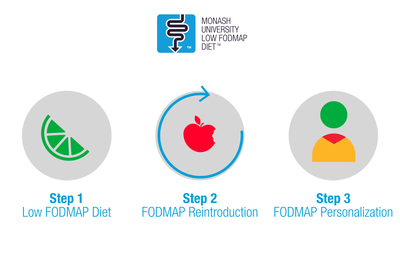
A low FODMAP diet theoretically will reduce the number of bacteria in the small bowel (and one study did show that breath tests become ‘normal’ in about the same number as with rifaximin therapy), but research has shown that reducing the density of bacteria in the colon may well be one mechanism by which reducing FODMAP intake might improve symptoms. Thus, like antibiotics, it is not known whether the benefit of the FODMAP diet in a person with IBS who might have SIBO is due to effects on the SIBO or not.
If you think you have SIBO, talk to your doctor. Remember there are no particular symptoms that characterise SIBO (i.e., we cannot tell who has SIBO on the basis of the symptoms or pattern of symptoms being experienced).
If you have been told you have SIBO by your doctor, this is not bad news. It can be seen as an opportunity for a different treatment to be offered. If the therapy does not help, don’t worry. It is likely that the SIBO is not important in causing your symptoms or it might also mean you do not have SIBO. Remember the tests are not precise and many healthy people have SIBO without it ever causing a problem.
 FODMAP Assistant