
As many of us here are well aware, the FODMAP diet is an evidence-based dietary treatment option for irritable bowel syndrome (IBS). The diet is recommended in IBS clinical guidelines around the world to different extents. There have been many trials conducted around the world confirming its efficacy in the short-term, and a small number of studies looking at its long-term effects.
As the FODMAP diet was developed by Western researchers and is often studied in Western countries, this reflects challenges of implementing this diet in other countries of the world, where non-Western dietary patterns are followed as part of the local culture.
In Asia, the Korean IBS guidelines clearly recommend the FODMAP diet as a first-line treatment option. While Japanese, Indian and the Asian consensus guidelines also acknowledge the efficacy of the FODMAP diet, they also mention the lack of local evidence and advocate for research in an Asian context to confirm the diet’s efficacy in these regions. Unlike Western guidelines, none of the Asian IBS guidelines recommend referral to a dietitian, further limiting systematic FODMAP implementation.
A recent review looked into the challenges of using the FODMAP diet with the Asian population.
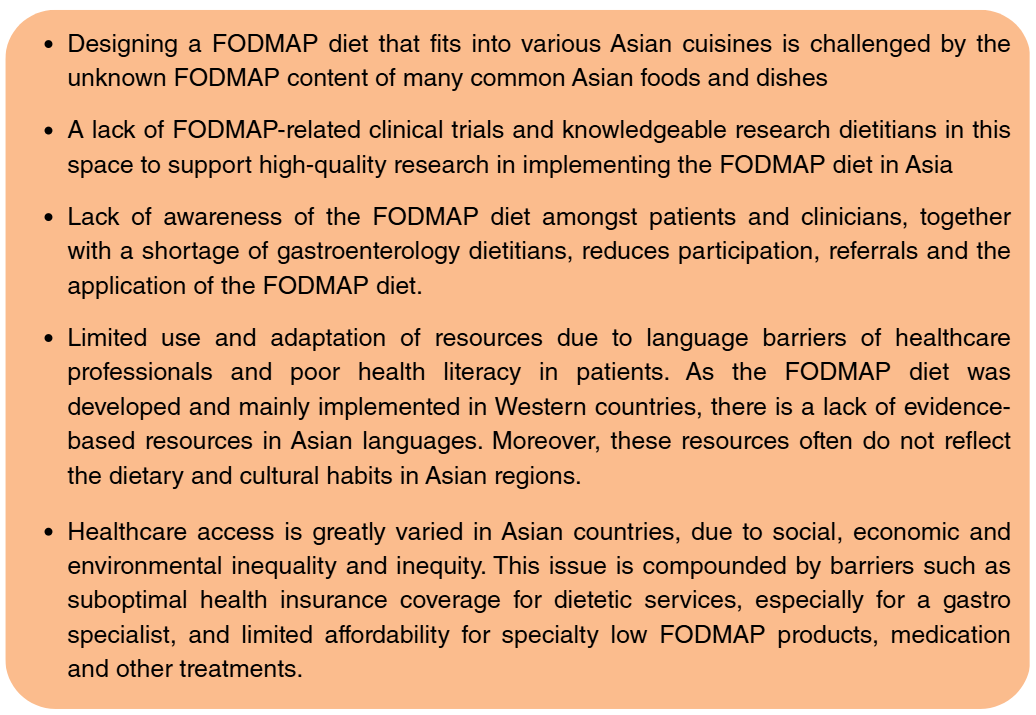
Below is a summary of the cultural, research, clinical and practical barriers to the implementation of the FODMAP diet in Asian countries:
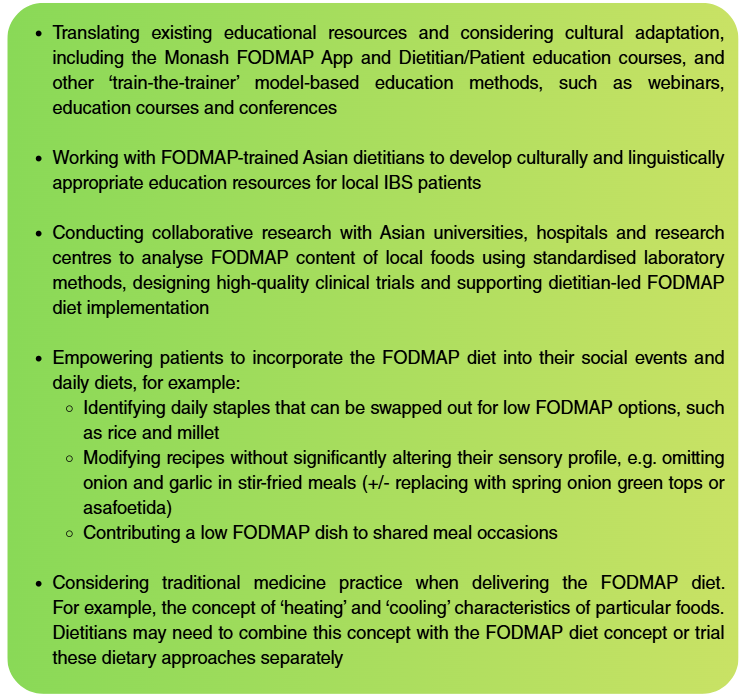
The paper also recommended some strategies to overcome these barriers, which include:
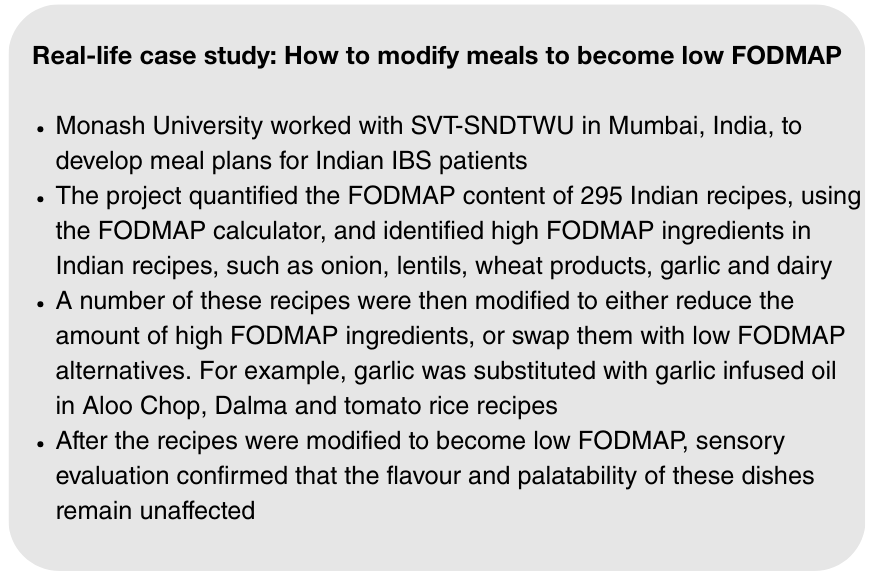
Below is a real-life example of the comprehensive process to quantify traditional recipes and considerations of lowering the FODMAP content of dishes.
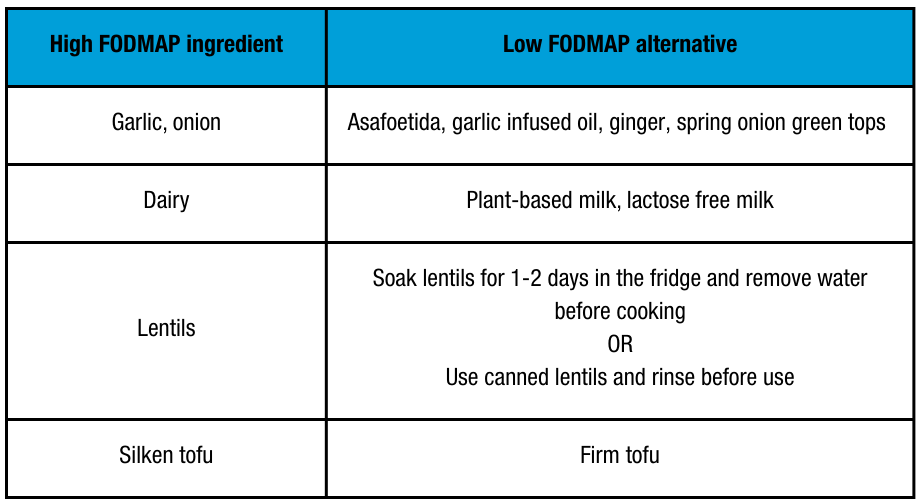
The table below is a snapshot of some high FODMAP ingredients commonly found in Asian cuisines, and low FODMAP alternatives to consider swapping out for.
Dietitians should also consider other comorbidities or conditions that may contradict the consumption of certain low FODMAP foods. For example, diabetes patients are often advised to limit rice intake, which is commonly used as a low FODMAP staple. Clinicians should consider low GI low FODMAP grains, such as brown rice, quinoa and foxtail millet.
As veganism and vegetarianism are often followed in Asia, especially for religious reasons, dietitians should consider the nutritional adequacy and cultural adaptation of low FODMAP vegetarian/vegan alternatives when prescribing a low FODMAP diet to these populations.
Reference: Varney JE, Madan J, Halmos EP, Krishnasamy S, Lee YY, Mustafa U, Siah KTH, Wu P, Yao CK, Ghoshal UC. Implementing a Fermentable Oligosaccharides, Disaccharides, Monosaccharides, and Polyols Diet in Asia: Addressing Cultural, Clinical and Practical Challenges. J Neurogastroenterol Motil 2025;31:422-437. https://doi.org/10.5056/jnm25090