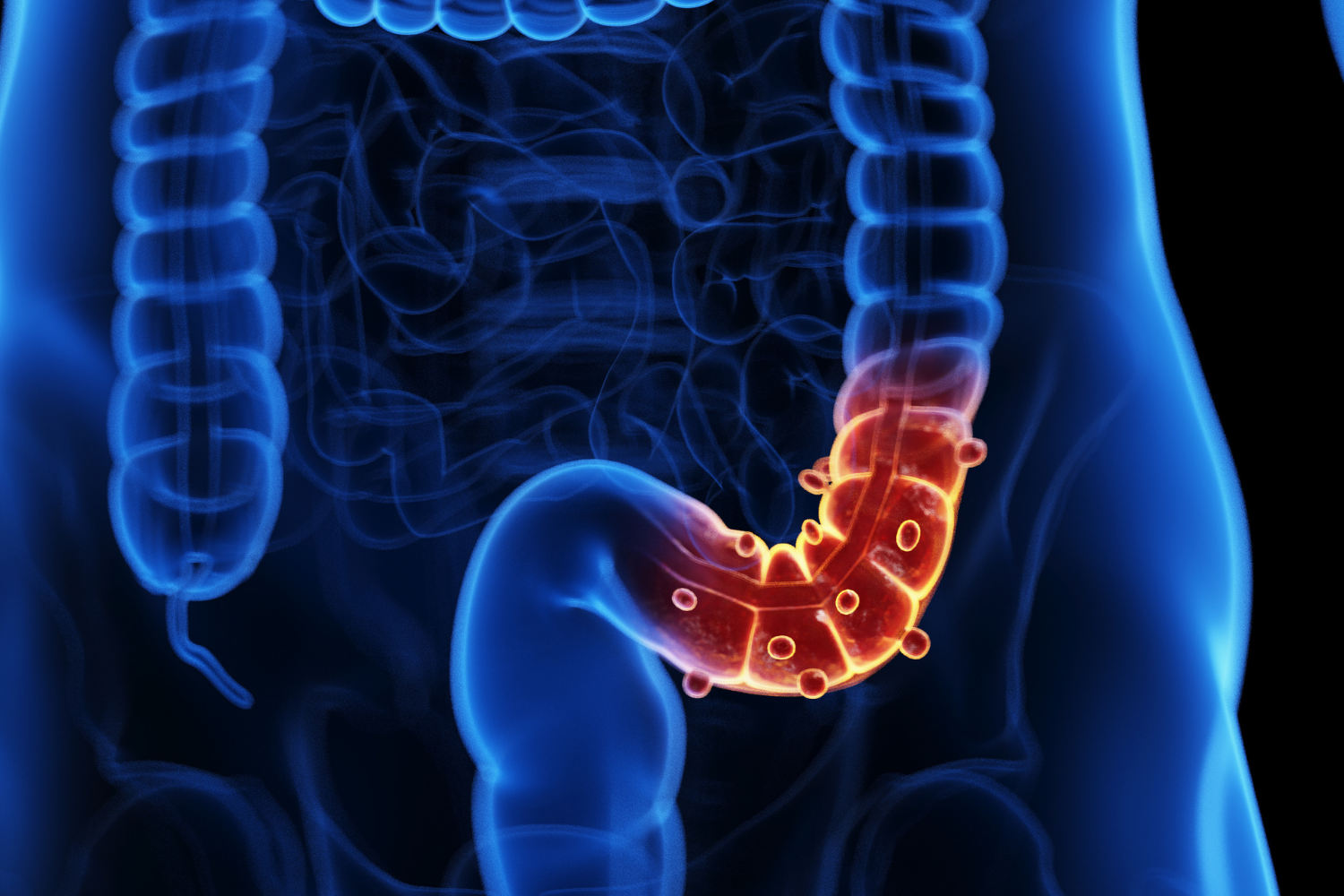
It’s easy to get confused by the terminology. Here is a quick breakdown to help you navigate your diagnosis:
For years, the advice for diverticular disease was "avoid nuts and seeds." We now know this is a myth! Current research shows that nuts, seeds, and popcorn are not only safe and do not increase the risk of a flare, but may actually be beneficial
There are some simple diet and lifestyle changes that can reduce the risk of diverticulitis. This includes a vegetarian diet, a diet high in fibre with minimal red meat and processed foods, maintaining a healthy body weight and engaging in regular, vigorous physical activity.
During an active flare of diverticulitis (infection), the goal shifts from "moving things along" to "giving the bowel a rest." Doctors typically recommend a temporary low-fibre or clear liquid diet. This reduces the volume of stool passing through the inflamed area, allowing the infection to heal.
There is currently no strong evidence that a low FODMAP diet prevents the initial formation of diverticula or the onset of diverticulitis. In fact, many high-fibre foods that protect the colon (like onions, garlic, and beans) are also high in FODMAPs. Restricting these unnecessarily could reduce the variety of fibre your gut needs for long-term health.
Many patients who have recovered from an acute bout of diverticulitis continue to experience "IBS-like" symptoms (bloating, abdominal pain, and altered bowel habits). This is often referred to as SUDD.
While it is possible that FODMAP restriction could help to manage IBS-like symptoms, there is no actual evidence to support this approach. People wishing to trial a low FODMAP diet for this purpose should do so under the guidance of a FODMAP-trained dietitian and implement minimal restrictions (e.g. using a FODMAP gentle approach), on a temporary basis only.
If you have diverticular disease, your diet should change based on how you feel:
Williams, S., Bjarnason, I., Hayee, B., & Haji, A. (2023). Diverticular disease: update on pathophysiology, classification and management. Frontline gastroenterology, 15(1), 50–58. https://doi.org/10.1136/flgastro-2022-102361.
Kishnani, S., Ottaviano, K., Rosenberg, L., Arker, S. H., Lee, H., Schuster, M., Tadros, M., & Valerian, B. (2022). Diverticular Disease—An Updated Management Review. Gastroenterology Insights, 13(4), 326-339. https://doi.org/10.3390/gastroent13040033.
Bailey, J., Dattani, S., & Jennings, A. (2022). Diverticular Disease: Rapid Evidence Review. American family physician, 106(2), 150–156.
Carabotti, M., Falangone, F., Cuomo, R., & Annibale, B. (2021). Role of Dietary Habits in the Prevention of Diverticular Disease Complications: A Systematic Review. Nutrients, 13(4), 1288. https://doi.org/10.3390/nu13041288.
Dahl, C., Crichton, M., Jenkins, J., Nucera, R., Mahoney, S., Marx, W., & Marshall, S. (2018). Evidence for Dietary Fibre Modification in the Recovery and Prevention of Reoccurrence of Acute, Uncomplicated Diverticulitis: A Systematic Literature Review. Nutrients, 10(2), 137. https://doi.org/10.3390/nu10020137.
Dietitians Australia. (2023, April 13). Diverticular disease | Dietitians Australia. Dietitiansaustralia.org.au. https://dietitiansaustralia.org.au/health-advice/diverticular-disease
Practitioners, T.R.A.C. of general (2017) Diverticular disease practice points, Australian Family Physician. Available at: https://www.racgp.org.au/afp/2017/november/diverticular-disease-practice-points.
Uno, Y., & van Velkinburgh, J. C. (2016). Logical hypothesis: Low FODMAP diet to prevent diverticulitis. World journal of gastrointestinal pharmacology and therapeutics, 7(4), 503–512. https://doi.org/10.4292/wjgpt.v7.i4.503
 FODMAP Assistant